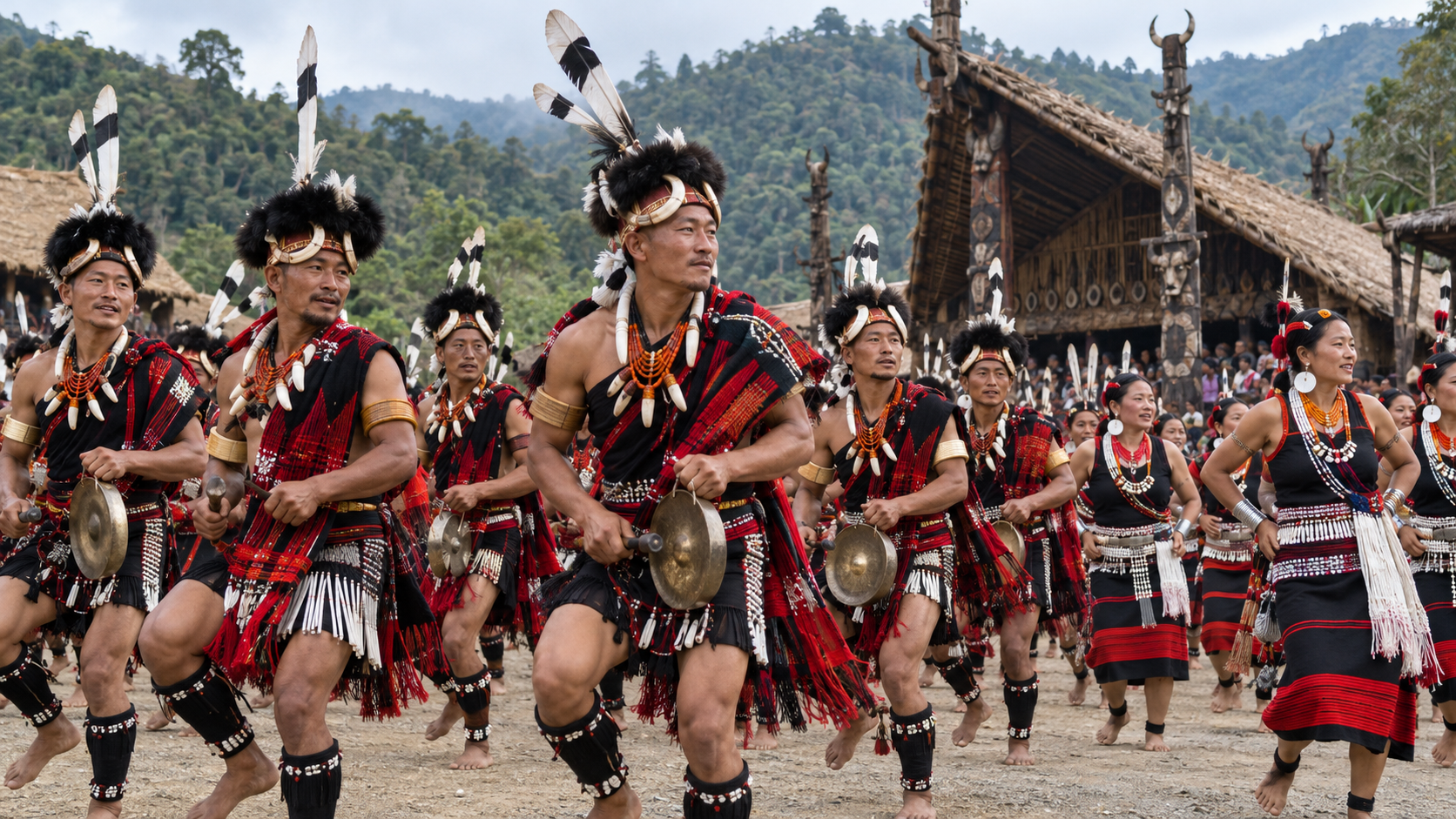
Kisama joins Ki from Kigwema, Sa from Phesama, and ma, which means village.
The Hornbill Festival is scheduled for 1 to 10 December 2026 at Naga Heritage Village in Kisama, about 12 km from Kohima, Nagaland. Tourism Nagaland (opens in a new tab) lists the dates, and its event calendar (opens in a new tab) names Kisama, Kohima as the venue. The Department of Information and Public Relations (opens in a new tab) identifies this as the festival's 27th edition. If you are planning a visit, start with the confirmed dates, then check the official programme and travel notices before choosing which days to attend.
2026 dates and venue
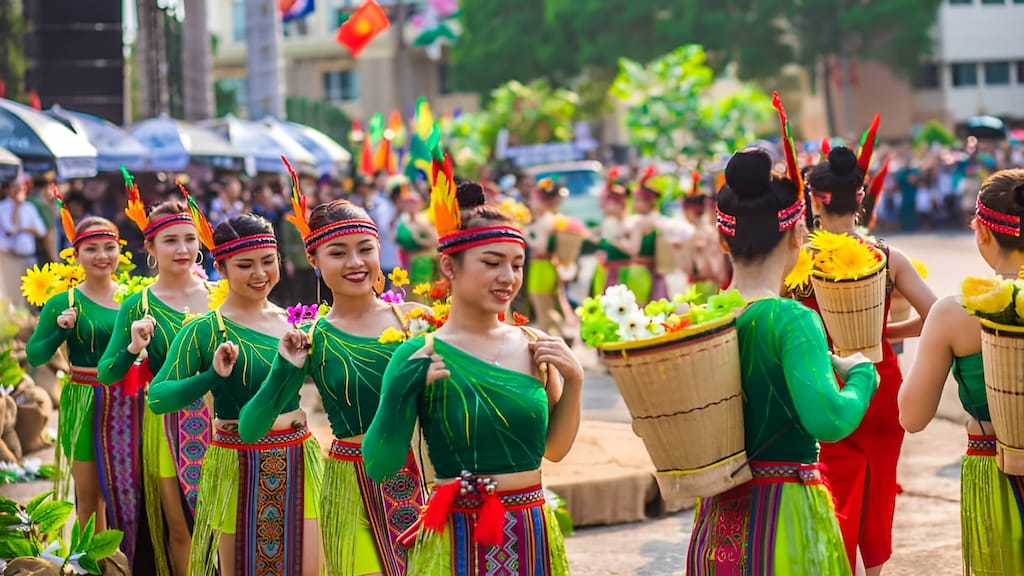
Hornbill is a ten-day festival organized by the Government of Nagaland through its Tourism and Art & Culture departments. The state began the event in 2000 to encourage interaction among Naga communities and present the region's cultural heritage through a shared programme, according to the official festival overview (opens in a new tab). The festival is often called the Festival of Festivals. The organizers describe cultural presentations, music, food, crafts, and sports as parts of the programme, with Kisama as the main site.
Kisama sits between Kohima and the nearby villages of Kigwema and Phesama. Its name combines Ki from Kigwema, Sa from Phesama, and ma, meaning village. The Naga Heritage Village description (opens in a new tab) gives this local explanation of the name.
What to see at Hornbill
The programme brings together performances and displays that visitors can explore between scheduled events. The official Hornbill event guide (opens in a new tab) describes ceremonial presentations, songs and dances, handloom and handicraft stalls, food, flower displays, indigenous games, traditional archery, Naga wrestling, and music. At Kisama, the Morungs are community houses designed in indigenous architectural styles. The festival's village guide (opens in a new tab) calls them Morungs or youth dormitories and also lists the World War II Museum, Bamboo Heritage Hall, and Bamboo Pavilion within the heritage complex.
The festival takes its name from the hornbill, a bird that appears in folklore among many communities in Nagaland, according to the official overview (opens in a new tab). The programme brings together distinct cultural presentations, so take time to read the introductions at each event. Ask before taking close-up portraits of performers or visitors.
There is also a wider state programme around the Kisama gathering. In its 15 October 2026 briefing (opens in a new tab), the Department of Information and Public Relations described more than 300 events at dozens of venues across Nagaland. Officials named cultural troupes, guests from Naga communities, and an e-sports tournament among preparations for the 2026 edition. The briefing records preparations; the day-wise event guide (opens in a new tab) is where to confirm final times and locations. The guide says the Government releases this list before each edition.
Getting to Kisama
For an air or rail arrival, the festival's travel page (opens in a new tab) identifies Dimapur as the airport and main railhead for Nagaland, then gives an approximate two-hour road journey from Dimapur to Kohima. Kisama is about 12 km from Kohima. Plan the journey in two parts: first reach Kohima, then arrange the local trip to the heritage village.
Festival-day transport can change by edition. At a preparatory meeting on 13 October 2026, the state government discussed roads, traffic management, vehicle passes, parking, and public facilities. Check current notices from Nagaland Tourism (opens in a new tab) close to your visit and leave time for the last leg. Do not rely on a shuttle timetable or traffic route from an earlier year unless officials confirm it for 2026.
Permits, tickets, and the day plan
Nagaland's current Inner Line Permit portal (opens in a new tab) says that people who are not indigenous to the state need a permit to enter, including Indian and foreign visitors. The portal lists separate applicant categories and current requirements. Read the instructions for your own category and apply through the government site before travelling; permit details and application steps can change.
The published programme and access arrangements are edition-specific. Follow live notices from Tourism Nagaland and the official festival site for admission information, any venue passes, and the final day-by-day timetable. The Tourism Nagaland event calendar (opens in a new tab) lists the festival at Kisama from 1 to 10 December. Check it alongside current notices so you have both the dates and the latest visitor information.
Where to stay and what to pack
Kohima is a practical base for the main Kisama site. The district administration maintains an accommodation directory (opens in a new tab), and you can compare current listings through Kohima hotel searches (opens in a new tab). Before booking, check the address and ask the property how guests usually reach Kisama during the festival. This matters if you plan to stay for an evening programme or travel on more than one day.
December brings winter chill to Kohima. The festival's visitor guide (opens in a new tab) recommends warm clothes and comfortable walking shoes. Layers help when you spend the day exploring and stay for evening music. Food stalls and craft displays are part of the event; if you need ingredient or material details, ask the seller directly.
Before leaving for Kisama, check your permit, lodging, final programme, any current vehicle passes, and the latest route information. Revisit the official pages close to your travel day, since the detailed schedule and road arrangements can change.
Public holidays around the festival
Public and bank holidays in India from 3 days before to 3 days after the festival ().
Shops, banks and transport should keep their normal timetable.
Editions
- 2026In 46 days